 Unlockr
Why You Keep Checking Your Phone, Even When Nothing's There
Most of the time your phone didn't call you. You went to it. Here's what researchers found when they filmed people's real phone use, why the checking habit sticks, and what makes it weaker.
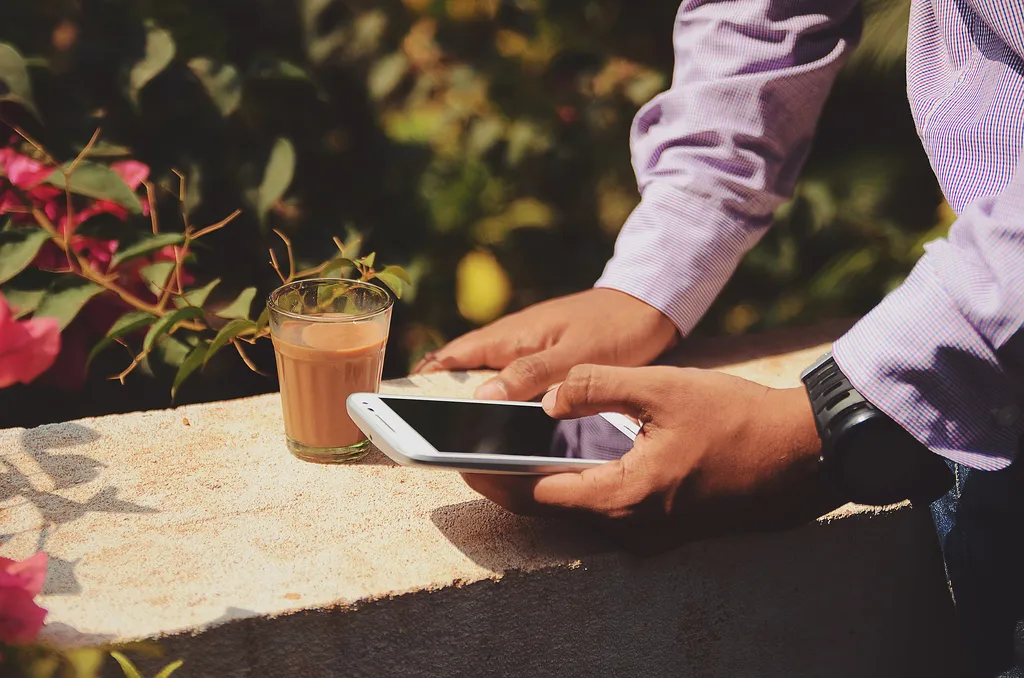
You unlock your phone. No new messages. You look at the home screen for a second, put it down, and pick up whatever you were doing. Four minutes later you do it again. Nothing happened in between. Nobody texted. You just went to check.
It's easy to blame notifications for this, and app makers for designing them. Some of that blame is fair. But when researchers actually watched people use their phones, notifications turned out to explain only a small part of it.
The short answer: you keep checking your phone mostly out of habit. In a study that filmed real phone use, 89% of pickups were started by the person, not by a notification. The habit is fed by the times something new is waiting. It gets weaker when checking pays off less often and takes a little more effort.
It's usually not the notifications
Researchers at the London School of Economics did something most phone studies don't. Instead of asking people about their habits, they had 37 people aged 21 to 29 wear small cameras at eye level during their normal days. That produced about 200 hours of footage and 1,130 separate phone interactions. Afterwards, each participant sat down with the researchers and watched their own recordings.
The results, published in 2021, were blunt. 89% of phone interactions were started by the user. Only 11% began with a notification the person actually saw, heard or felt. On average, people picked up their phone about once every five minutes and used it for about a minute, and that rhythm barely changed whether they were at home or at work, alone or with others.
The most telling detail is the lock screen check: waking the screen for a few seconds without really doing anything. One in six interactions was one of these. They lasted 5.2 seconds on average, and only 15.6% of them were prompted by a notification.
One fair caveat: most participants kept their phones on silent or out of earshot most of the time, which pushes the notification share down. But that is also the point. Even with the phone quiet, people kept going back to it. One participant cooked dinner for an hour, plated it, picked up her phone, and was still on it fifteen minutes later. Watching the footage, she said: "I just don't get it, even though I'm so hungry I'm still on my phone."
You check more often than you think
If you're not sure this describes you, that's normal. In a 2015 study from the UK, 23 adults installed an app that logged every time they used their phone for two weeks. Before seeing their data, they estimated how often they picked it up.
They used their phones about 85 times a day and guessed 37. Worse, the guesses had no relationship to reality: people who thought they checked a lot weren't the ones who actually did. Their estimates of total time were closer. It's the short checks that slip past us.
That fits what a habit is. You don't remember doing things you do on autopilot. One LSE participant, after watching their own footage, put it plainly: "I don't even remember picking it up. I think I use it a lot more than I let myself believe."
How a checking habit forms
The term comes from a 2012 paper by Antti Oulasvirta and colleagues, who looked at smartphone logs from the US and Finland. They defined a checking habit as brief, repetitive inspection of content that might have changed: messages, feeds, email, news. They also found that these quick checks sometimes led people on to other things on the phone, so the habit may add to total phone time instead of just filling gaps.
The engine is what they called informational rewards. Sometimes you check and there's a new message, a like, a reply you were waiting for. Often there's nothing. You can't tell which it will be until you look, and the payoff takes about a second to collect. A behavior that pays off unpredictably and almost instantly is one of the easiest kinds to make automatic. One research team compares notifications to a slot machine for exactly this reason. (This is the "wanting" system at work, not a chemical running low; more on that distinction in dopamine detox: what the science actually says.)
Habits also need cues, and the LSE interviews show what they look like. Participants described picking up the phone as automatic, "like when you cough and put your hand over your mouth." They used short phone breaks to stitch their day together, between one activity and the next. And they reached for it when the current activity felt boring or frustrating: work they didn't enjoy, or chores like cooking, cleaning and commuting. Their minds drifted off, and the phone was where they drifted to.
So the loop goes like this. A small gap or a moment of boredom is the cue. Picking up the phone is the routine. Occasionally finding something new is the reward. Repeat it a few dozen times a day for a few years and you no longer decide to check. Your hand does.
One more thing worth knowing: Oulasvirta's participants described the checking as more of an annoyance than an addiction. That matches how a lot of people feel. It isn't ruining your life. You just wish you did it less.
Notifications still matter, just differently
None of this means notifications are harmless. In a 2015 lab study at Florida State University, people doing an attention-heavy task performed worse when their phone buzzed or rang, even though they didn't touch it. The drop was about as large as when people actually took a call or texted. A notification doesn't need to be answered to pull your mind away.
Notifications also train the habit. Every time a check pays off because something arrived, the "maybe there's something" feeling gets a little stronger.
But switching them all off isn't the answer either. In a 2019 randomized field experiment with 237 people, one group got their notifications as usual, one got them in three batches a day, and one got none at all. The batched group felt more attentive, in a better mood, less stressed and more in control of their phones. The no-notifications group didn't gain much, and reported more anxiety and fear of missing out. Which makes sense: if you can't trust the phone to tell you about something important, you check it yourself.
What actually helps
If checking is a habit fed by quick, unpredictable rewards, there are two levers: make checking pay off less often, and make it take a little more effort. Here's how that translates on an iPhone.
- Batch your notifications. Go to Settings → Notifications → Scheduled Summary, turn it on, and pick two or three times a day. Add the chatty apps (social media, shopping, news) to the summary. Time-sensitive alerts still arrive right away, and for messaging apps you can choose whether direct messages skip the summary. This is the closest built-in version of the three-batches setup from the 2019 study.
- Make the lock screen boring. In Settings → Notifications → Display As, choose Count. The lock screen then shows a number instead of previews, so a 5-second lock screen check gives you less to read. This is my reasoning from the research, not something a study tested.
- Put a pause in front of the apps you check most. This is the lever with the best evidence. In a 2023 PNAS study of 280 people using the app one sec, a short pop-up before opening a chosen app led people to close it again 36% of the time. Over six weeks they also tried to open those apps 37% less, for a 57% drop overall. The study had no control group and the app's developer was a co-author, but a follow-up experiment found the same thing: the delay and the easy option to back out did the work. My guide to reducing screen time on iPhone covers the ways to add a pause.
- Notice your cues. For a day, pay attention to the moment just before you pick up the phone. It's usually a gap: a page loading, a queue, the end of a task. You don't have to stop. Just noticing turns some automatic checks back into choices.
- Move the phone out of reach for focused work. A bag, a drawer, another room. Many of the LSE participants already did versions of this, from turning the phone face down to leaving it at home. No study above measured how well it works, but it pulls the same lever as a pause: the check takes more effort. (It's a separate question whether a phone's mere presence quietly drains your focus even when you don't check it; the evidence there is shakier than you'd think.)
Don't aim for zero. Checking your phone is a reasonable thing to do some of the time. The goal is to check because you decided to, not because your hand got there first.
Frequently asked questions
Why do I keep checking my phone for no reason?
Usually it's a habit, not a response to anything. In a 2021 study where 37 young adults wore small cameras, 89 percent of phone pickups were started by the user, not by a notification. Researchers call it a checking habit: quick, repeated looks at content that might have changed, reinforced by the times something new is there.
How many times a day do people check their phones?
In a 2015 study that logged phone use for two weeks, 23 adults picked up their phones about 85 times a day on average. They estimated about 37. More than half of those uses lasted under 30 seconds.
Is checking my phone a lot an addiction?
Not necessarily. Frequent checking fits the pattern of an ordinary habit, and in an early study of smartphone checking, people described it as more of an annoyance than an addiction. Phone addiction is not a formal diagnosis. A habit can still be worth breaking.
Should I turn off all notifications?
Batching tends to work better than turning them all off. In a 2019 randomized field experiment with 237 people, getting notifications in three batches a day made people feel more attentive, in a better mood and more in control of their phones. People who got no notifications at all reported more anxiety and fear of missing out.
Sources
- Heitmayer, M., & Lahlou, S. (2021). Why are smartphones disruptive? An empirical study of smartphone use in real-life contexts. Computers in Human Behavior, 116, 106637. doi.org/10.1016/j.chb.2020.106637
- Andrews, S., Ellis, D. A., Shaw, H., & Piwek, L. (2015). Beyond self-report: Tools to compare estimated and real-world smartphone use. PLOS ONE, 10(10), e0139004. doi.org/10.1371/journal.pone.0139004
- Oulasvirta, A., Rattenbury, T., Ma, L., & Raita, E. (2012). Habits make smartphone use more pervasive. Personal and Ubiquitous Computing, 16(1), 105–114. doi.org/10.1007/s00779-011-0412-2
- Stothart, C., Mitchum, A., & Yehnert, C. (2015). The attentional cost of receiving a cell phone notification. Journal of Experimental Psychology: Human Perception and Performance, 41(4), 893–897. doi.org/10.1037/xhp0000100
- Fitz, N., Kushlev, K., Jagannathan, R., Lewis, T., Paliwal, D., & Ariely, D. (2019). Batching smartphone notifications can improve well-being. Computers in Human Behavior, 101, 84–94. doi.org/10.1016/j.chb.2019.07.016
- Grüning, D. J., Riedel, F., & Lorenz-Spreen, P. (2023). Directing smartphone use through the self-nudge app one sec. PNAS, 120(8), e2213114120. doi.org/10.1073/pnas.2213114120