 Unlockr
Does a Phone on the Table Hurt Conversation?
You put your phone face down next to your plate "just in case." You never touch it. Does it still change the conversation? A famous experiment said yes, a bigger replication said no, and a restaurant study points somewhere more useful.
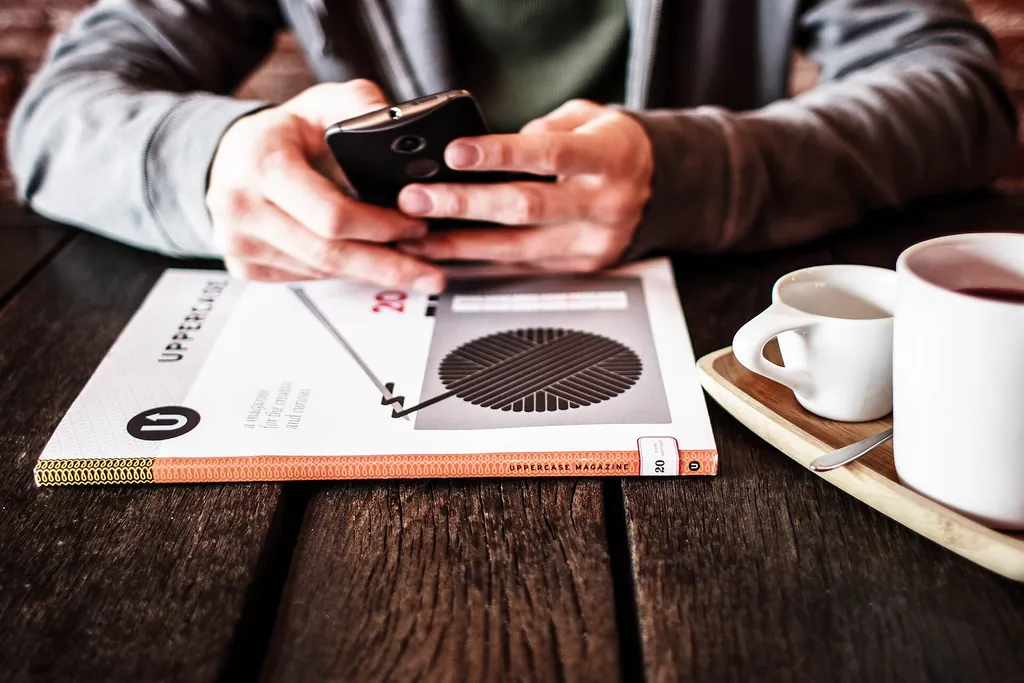
Two ideas get mixed together here. One is a phone that is merely there. The other is a phone that people actually use while someone is talking to them. The research looks quite different for each.
The short answer: the stronger evidence is about use, not presence. People who used their phones during a meal enjoyed it less. The claim that a silent phone in view lowers closeness did not hold up in a larger replication.
The 2013 experiment, and what happened when it was repeated
In Przybylski and Weinstein's 2013 paper, pairs of strangers talked while a phone was either in view or not. When the topic was meaningful, people with a phone nearby reported lower closeness, trust, and empathy. It was widely quoted as proof that a phone on the table damages connection.
Then Linares and Sellier (2021) ran it again across two studies with 356 participants in 136 groups. They reported that they failed to replicate the original relationship-quality results: no significant difference on closeness or trust. The authors are careful that a null result does not prove there is no effect, and they list possible reasons, including changes in phone use since 2012 and limited statistical power.
So the fair summary is not "phones on tables are harmless" or "phones on tables ruin everything." It is that the mere-presence effect is harder to find than the early headlines suggested.
What happened at dinner when phones came out
Dwyer, Kushlev, and Dunn (2018) studied real meals. In their first study, more than 300 diners eating with friends or family were randomly assigned to keep their phones on the table or put them away. Afterward they rated how the meal went, and they did not know their phone use was being watched.
Those with phones out felt more distracted and enjoyed the time with their companions less, by roughly half a point on a seven-point scale. They also reported slightly more boredom, which the researchers found surprising. A second study of over 100 people answered short surveys five times a day for a week, and showed the same pattern: in-person interactions were enjoyed less when people had been using their phones.
This is a modest effect, and the authors say occasional use is unlikely to do lasting harm. It was also a restaurant setting, with self-reported enjoyment. But it is a randomized comparison of real behavior, and the mechanism it points to, distraction, is plausible.
Being phubbed by a partner
"Phubbing" means snubbing the person in front of you for your phone. Roberts and David (2016) built a short scale to measure it in couples, then surveyed 145 adults. More partner phubbing went with more conflict over phone use, and through that, with lower relationship satisfaction.
The word to hold onto is "went with." It is a survey, so it cannot show which came first. A couple that is already unhappy may also reach for their phones more. Still, the finding fits what many people already notice: the sting usually comes from feeling second to the screen, not from the object itself.
A way to try it that does not feel like a rule
This is a suggested experiment, not a protocol from the studies above.
1. Separate "available" from "in use"
If you are expecting something real, like a call from a family member, say so at the start: "I might need to pick up once." That is different from checking out of habit, and the people you are with can tell.
2. Try one meal with the phone out of reach
A bag or another room works better than face down on the table, because the point is to remove the easy reach. Afterward, notice how the conversation felt, not whether you "won."
3. Notice the pause
Many phone checks happen in lulls. Our piece on why you keep checking your phone looks at that pattern. A lull in conversation is normal, and it can be allowed to stay a lull.
4. Ask, do not assume
Some people do not mind a phone on the table, and some do. Asking costs one sentence. If you want to reduce interruptions generally, notifications and focus covers what silenced alerts can and cannot do. On iPhone, a Focus can hold back most alerts while letting through chosen people.
Use matters more than presence
If you take one thing from this: the evidence is stronger for what you do with the phone than for where it sits. And the earlier research on phone presence and attention is about solo mental tasks, a different question from conversation.
Frequently asked questions
Is it rude to put my phone on the table?
The studies here do not show that a visible phone alone is harmful. The clearer finding is about use: people who used phones during meals enjoyed them less. Etiquette also depends on the people and the situation, so it is worth asking what your companions prefer.
Does having a phone nearby reduce closeness?
One 2013 experiment found lower reported closeness with a phone in view, but a larger 2021 replication did not reproduce that result. Treat the claim as unsettled rather than proven.
What is phubbing?
Phubbing means snubbing someone in person by attending to your phone. Roberts and David (2016) measured it in romantic couples and found that more phubbing was linked to more conflict about phone use and lower relationship satisfaction. The design was correlational.
Sources
- Przybylski, A. K., & Weinstein, N. (2013). Can you connect with me now? How the presence of mobile communication technology influences face-to-face conversation quality. Journal of Social and Personal Relationships, 30(3), 237–246. doi.org/10.1177/0265407512453827.
- Linares, A., & Sellier, A.-L. (2021). How bad is the mere presence of a phone? A replication of Przybylski and Weinstein (2013) and an extension to creativity. PLoS ONE. doi.org/10.1371/journal.pone.0251451.
- Dwyer, R. J., Kushlev, K., & Dunn, E. W. (2018). Smartphone use undermines enjoyment of face-to-face social interactions. Journal of Experimental Social Psychology, 78, 233–239. doi.org/10.1016/j.jesp.2017.10.007.
- Roberts, J. A., & David, M. E. (2016). My life has become a major distraction from my cell phone: Partner phubbing and relationship satisfaction among romantic partners. Computers in Human Behavior, 54, 134–141. doi.org/10.1016/j.chb.2015.07.058.
- Apple. Set up a Focus on iPhone. Checked November 9, 2026.