 Unlockr
Is Reading on a Screen Worse Than Reading on Paper?
You read a long article on your phone, nod along, and close it. An hour later you try to explain it to someone and most of it has gone. Was that the phone, or just the article? Researchers have compared the two hundreds of times, and the answer is more specific than "screens bad".
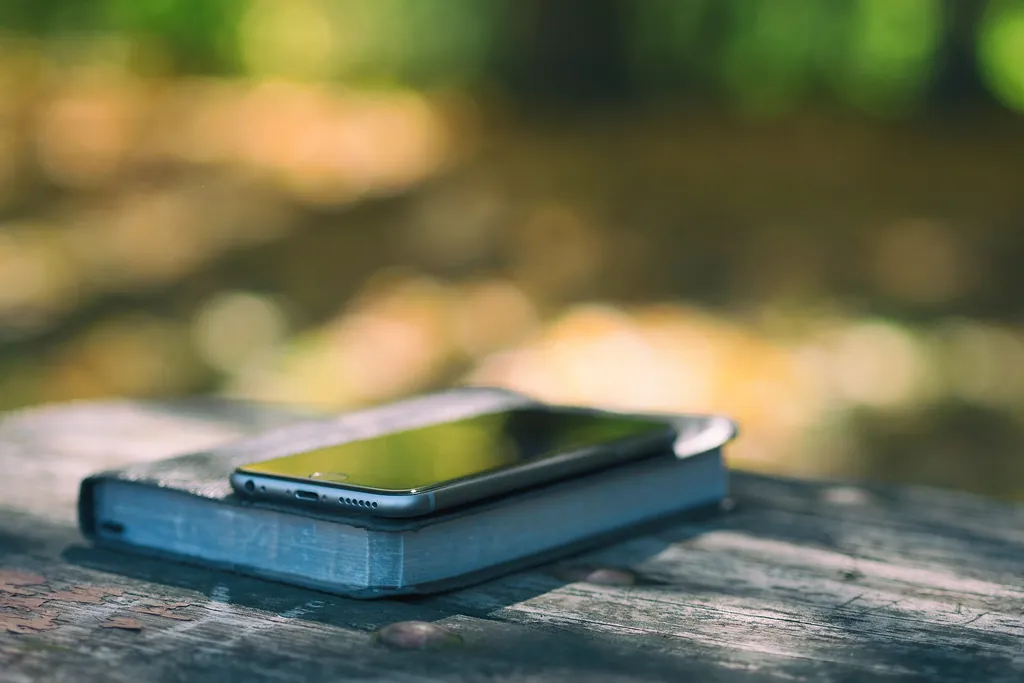
Two large reviews pooled the experiments that hand people the same text on paper or on a screen and then test what they understood. Both found a small edge for paper. Both also found that it depends a lot on what you are reading.
The short answer: for articles, reports and textbooks, people understood slightly more on paper. For stories, there was no real difference. The more useful finding is that screen readers were more likely to think they understood something when they hadn't.
What the two meta-analyses found
Delgado, Vargas, Ackerman and Salmerón (2018) collected studies from 2000 to 2017: 54 of them, with 171,055 participants in total. Across designs, paper came out ahead with an effect size of g = −0.21. In plain terms, that is a small difference. You would not notice it reading a single page, but it is consistent.
Three things changed the size of the gap. It was larger when people read under time pressure than when they could take as long as they liked. It showed up for informational texts but not for purely narrative ones. And, oddly, it grew over the years the studies were published, rather than shrinking as people got used to screens.
A separate review by Virginia Clinton (2019) looked at 33 experiments with 2,799 participants. It found a similar overall effect (g = −0.25), concentrated in expository texts (g = −0.32), with essentially none for narrative texts (g = −0.04). Reading time did not reliably differ, so screen readers were not simply rushing.
The overconfidence problem
Clinton's review also looked at calibration: how well people's judgement of their own understanding matched their actual scores. Readers were better calibrated on paper (g = 0.20). On screens they tended to believe they had understood more than they had.
That matters more than the comprehension gap itself. If you know a text is hard, you slow down, reread, or take notes. If you feel you have got it, you move on. A small drop in understanding, combined with not noticing the drop, is how an article you "read" turns into one you can't explain.
Nobody has pinned down exactly why. Researchers point to habits more than pixels: we use screens for quick, shallow reading all day, and that mode may follow us into the texts that need more care. The finding that the gap grows under time pressure fits that idea.
What this does and doesn't say about phones
Most of the studies in the 2018 meta-analysis used computers, in about three quarters of the comparisons. Phones and tablets were a small minority. A phone adds things a desktop test doesn't: a smaller screen, more scrolling, and notifications sliding in mid-paragraph. Those could make the gap bigger, but the evidence for phones specifically is too thin to say by how much.
The studies tested how well people understood set texts under study conditions. They tell you about understanding a passage, not about whether reading on a phone makes you read less overall, or whether ebooks put people off books. Those are different questions.
If you mostly read fiction on your phone, the evidence gives you little reason to switch. If you are trying to learn something from what you read, it is worth a closer look.
How to read better on a screen
These are suggestions based on the moderators above, not tested interventions from the studies.
1. Match the medium to the job
For something you need to understand and remember, like a contract, a study guide or a long report, print it or use a larger screen when you can. For a novel, read wherever you enjoy reading.
2. Take the clock away
The paper advantage was largest under time pressure. If you are skimming because you feel you should be somewhere else, schedule the reading for when you are not. Our piece on how long it takes to refocus covers why fragmented attention is expensive.
3. Silence the phone while it is the book
Turn on a Focus or Do Not Disturb before a long read, so a banner doesn't pull you out halfway through a paragraph. Notifications and focus looks at what even ignored alerts can do.
4. Test yourself before you close it
Because screens make us overconfident, add a quick check: write the main point in one sentence, or explain it out loud. If you can't, that is your cue to reread, not a sign the article was bad.
Paper wins, but only on some days
The difference between screens and paper is real but small, it mostly applies to texts you need to learn from, and it seems tied to how we read on screens rather than the screen itself. The fix is less about buying more books and more about reading slowly on purpose.
Frequently asked questions
Is reading on a phone bad for comprehension?
For informational texts, studies found a small advantage for paper on average. Most of those studies used computers rather than phones, so the evidence for phones specifically is thinner. For stories, the meta-analyses found no meaningful difference.
Are ebooks worse than printed books?
For novels and other narrative texts, the two meta-analyses here found no meaningful difference in comprehension. The paper advantage showed up mainly for informational texts such as articles, textbooks and reports.
How can I read better on a screen?
Give yourself time instead of skimming against the clock, silence notifications while you read, and check your understanding before you move on, for example by summarising the main point in a sentence. Readers on screens tended to overestimate how well they had understood.
Sources
- Delgado, P., Vargas, C., Ackerman, R., & Salmerón, L. (2018). Don't throw away your printed books: A meta-analysis on the effects of reading media on reading comprehension. Educational Research Review, 25, 23–38. doi.org/10.1016/j.edurev.2018.09.003.
- Clinton, V. (2019). Reading from paper compared to screens: A systematic review and meta-analysis. Journal of Research in Reading, 42(2), 288–325. doi.org/10.1111/1467-9817.12269.